The Paint Dried. And Changed Its Mind.
A sample in the pot, a sample on the wall, and a sample at 9 p.m. under the lamp. Three colors, one decision.
PIXEL / LEAD DESIGNERA STUDIO STORY
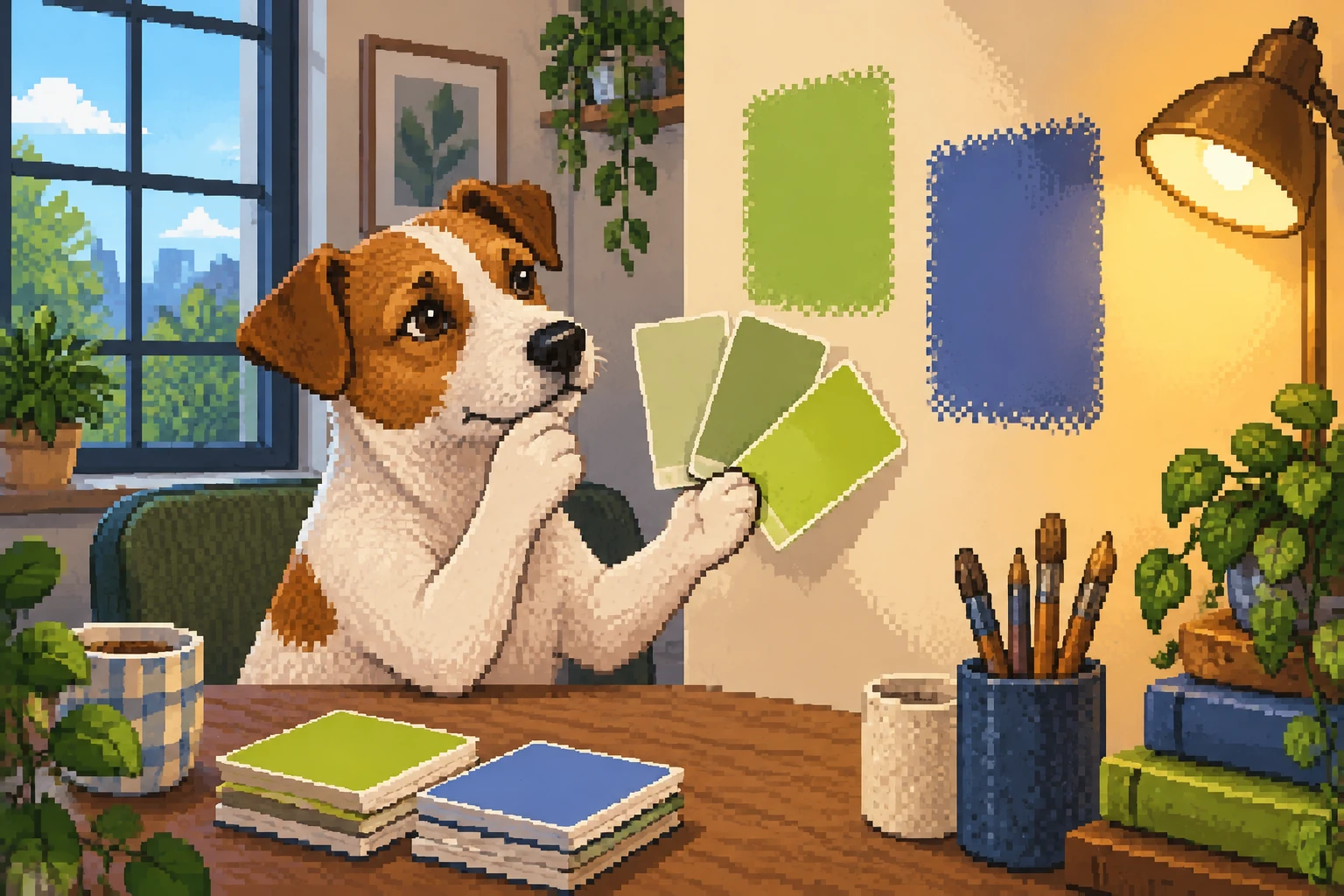
Pixel brought the client five shades of white. For twenty minutes the client was certain it was the third one. Then they turned on the lamp, and things got interesting.
A Color Isn’t One Thing. It’s Three.
The same paint looks different in the pot, on the card, and across a whole wall — and in the evening under the lamp it can change its mind by two tones. So we paint samples on a piece of the actual wall and look at them at different hours.
We don’t promise the shade from the card will be identical on the wall. Light, plaster texture and the furniture next door all have a say. An honest conversation about that costs fifteen minutes and saves the entire stage.
The Day Version and the Evening Version of the Same Room.
In the morning the room is blue, in the evening it’s beige, and on a cloudy Monday it’s an open investigation. So Pixel draws two mood versions: the one from the window and the one from the lamp.
A good color choice survives a whole day. If it only looks right in a render with perfect light, it isn’t a color — it’s a special effect.
The Decision, Written Down Once.
When the client says “that one”, we note the name, the manufacturer, and which wall the sample hung on. Without that, three weeks later comes the message: “actually, the earlier white”.
Decisions like that belong next to the project, not in a separate chat. arkeeno lets you pin the color decision where the rest of the documentation sits, so nobody has to dig through email for it.
SIGNED BY
LEAD DESIGNER
[ PIXEL SAYS ]

“YOU CHOOSE A COLOR TWICE: ON THE SAMPLE, AND AT 9 P.M. UNDER THE LAMP.”